
Roof Leak? What to Do Before the Roofer Gets There
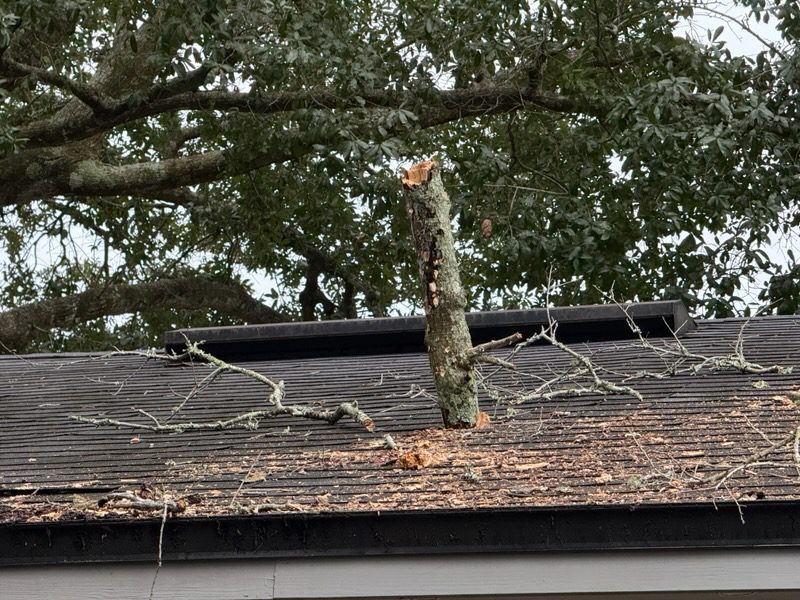
It usually happens during one of those afternoon storms. You hear a drip, look up, and there’s a brown spot spreading across the ceiling. If you’re in Jacksonville, Arlington, Mandarin, Orange Park, or out at the beaches, you’re not the first person this has happened to this week, and there’s a lot you can do right now to keep a small problem from turning into a big one.
Step 1: Protect Your Family and Your Stuff
If water is near light fixtures, outlets, or ceiling fans, turn off power to that area at the breaker. Then move furniture, electronics, and rugs out of the way and put down towels and a bucket.
Step 2: Relieve a Bulging Ceiling
If the drywall is sagging with a bubble of water, it can come down all at once. Put a bucket underneath and poke a small hole in the center of the bulge with a screwdriver. It feels wrong, but letting the water drain in one spot is a lot better than losing a whole section of ceiling.
Step 3: Take Photos and Video
Before you clean anything up, document it. Get pictures of the ceiling, the wet floor, any damaged belongings, and the outside of the roof from the ground if you can see damage. Write down the date and time. If this turns into an insurance claim, these photos matter a lot.
Step 4: Don’t Climb on the Roof
We get it. You want to see what’s going on. But a wet roof is slippery, and storms often leave loose shingles and debris up there. Leave the roof to the pros. Every year people get hurt trying to tarp their own roof in the rain.
Step 5: Call a Local Roofer
A roofer can find where the water is coming in (which is often not directly above the stain) and get a tarp or temporary repair on to stop more water from getting in. We offer emergency roofing help across Northeast Florida for exactly this reason.
Step 6: Check Your Insurance Policy
If the leak came from storm or wind damage, your homeowners policy may cover it. Most policies expect you to take reasonable steps to prevent more damage, which is why getting a tarp on quickly matters. Keep any receipts for emergency work. Our guide to storm damage and insurance claims in Jacksonville walks through the whole process.
Where Roof Leaks Usually Start
In our experience, most leaks around Jacksonville come from a handful of places:
- Cracked rubber pipe boots around plumbing vents
- Loose or rusted flashing around chimneys, walls, and skylights
- Shingles lifted or blown off by wind
- Clogged gutters that back water up under the roof edge
- Old, worn out shingles that just can’t keep water out anymore
Some of these are quick repairs. If your roof is older and leaking in more than one spot, it may be time to look at whether to repair or replace.
Frequently Asked Questions
Can a roof be repaired while it’s raining?
Usually not a permanent repair. A roofer can often put a tarp on to stop the water, then come back once the roof is dry to make the real repair.
Does homeowners insurance cover roof leaks?
It depends on the cause. Leaks from sudden storm or wind damage are often covered. Leaks caused by age or wear usually aren’t. A roofer’s inspection report can help show what caused it.
How do I find where my roof is leaking?
Water can travel along rafters before it drips, so the stain may be several feet away from the actual problem. A roofer will check the attic and the roof surface to track it down.
Leaking Right Now?
Call us at (904) 910-3121. We’ll help you figure out what’s going on and what to do next. You can also request an inspection online, learn about our insurance claim assistance, or contact our team.

Be the first to comment